
Technical
This section is designed to describe the various well intervention methods available and commonly used within the industry. The list is not exhaustive but concentrates on the key activities that may be performed 'rigless' or with minimal rig assistance.
Detailed Reports & Presentations
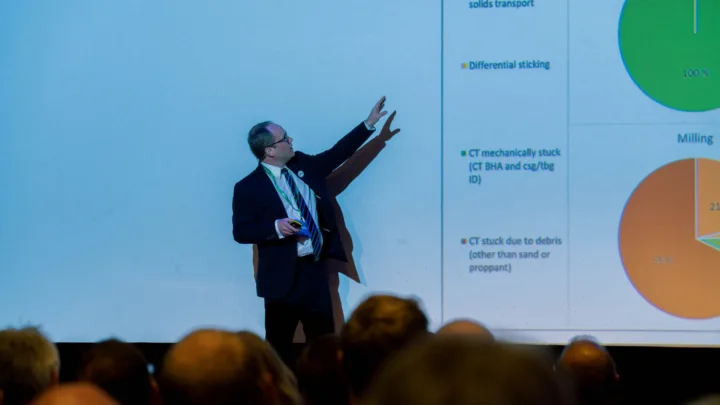
For ICoTA members detailed and informative reports and presentations may be found in the 'members area' section - this information is fully downloadable. Members are encouraged to contribute to this section so that ICoTA can build a fully comprehensive technical information service.

History
Within this section you will be able to find out more about the history of the Coiled Tubing and Intervention industry.

Coiled Tubing
There are three types of conduits used to work in wells including jointed pipe (drill pipe, tubing, casing), cable (wireline, slickline), and continuous pipe (coiled tubing).

Hydraulic Workover
Hydraulic Workover or Snubbing (HWO) as it is sometimes referred to is a well intervention method which has been in existence for many years.

Wireline
Wireline is the generic name relating to a well intervention method for conveying tools to and from the well bore. Wireline may be split into 3 sub sections namely Slick-line, Electric Line & Braided Line.

Subsea Well Intervention
SubSea Well Intervention is a specialised intervention area although the principles of operation are identical to a platform or onshore based intervention service.

Downhole Tractors
The early 1990s saw the introduction and growth of highly deviated and horizontal wells in many oil & gas fields across the globe.

Well Integrity
Well Integrity is concerned with constructing a well with a system of physical barriers to prevent the unplanned movement of fluids within a well and preventing unplanned release into the environment.

Stimulation
'Stimulation' is a generic term used to describe the process of increasing a well’s productivity through a specific type of operation.