
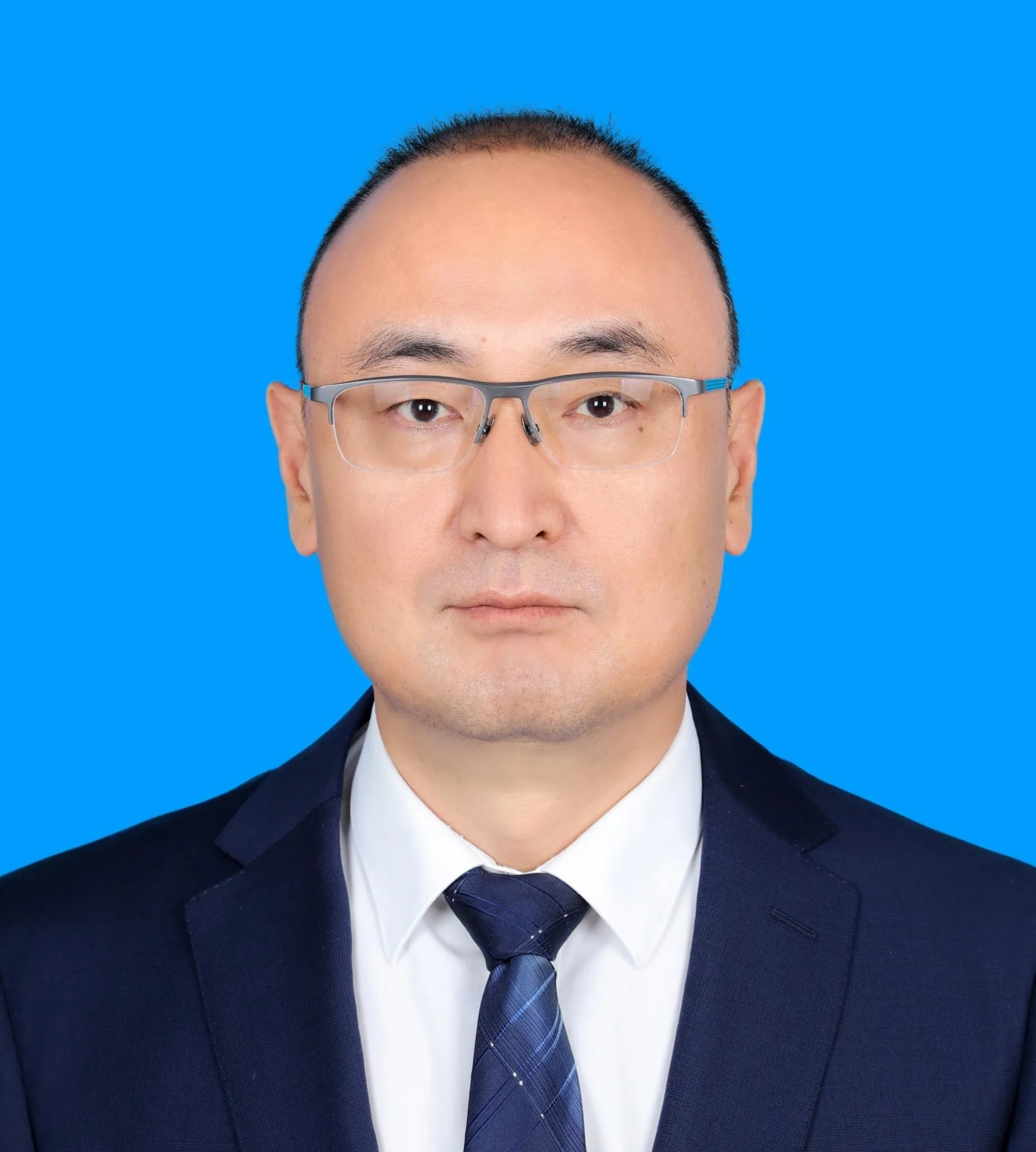
Qu Gang is Vice President of CNPC Engineering Technology R&D Company Limited and Chair of the ICoTA China Chapter. With decades of field and research experience across China's most technically demanding basins, he has become one of the industry's foremost voices on coiled tubing innovation, energy transition, and the development of the next generation of petroleum engineers.
A Career Built on Breakthrough
Qu Gang's career reads like a map of China's most challenging oilfield frontiers. He led the development and localisation of the XZ-TRS Rotary Steerable System, achieving six technologies recognised at an internationally advanced level. His work on coiled tubing sand-jet perforation and related techniques helped reduce the drilling cycle for shale oil wells to just 15 days, a remarkable compression of time and cost. In the Tarim Basin, he oversaw the drilling of a 9,000-metre well completed in a record 112.5 days.
Beyond the technical achievements, Qu Gang has also transformed how operations are managed. He established a 'Centralised Scheduling' mechanism that boosted rig efficiency by 25%, and introduced electric-drive skid fracturing operations, filling a critical regional technology gap.
“In drilling, you can’t just stare at the screen — you have to feel the formation’s temperament to truly understand the technology.”
Turning World-Class Challenges into World-Class Solutions
Qu Gang has confronted some of the industry's most formidable obstacles head-on. In the southern margin of the Junggar Basin, he faced ultra-deep drilling conditions characterised by extreme high temperature, high pressure, and severe loss circulation. His response was to establish an integrated geology-engineering collaboration platform, develop ultra-high-temperature drilling fluids and precise managed pressure technologies, and successfully implement 'one-run drilling' in the Anjihe Formation, enabling major discoveries including the Hutang-1 and Tianwan-1 wells.
A second major challenge arose in Xinjiang Oilfield, where high-salinity produced water was causing severe fracturing-fluid shortages and growing environmental pressure. Working with universities and enterprises, Qu Gang developed a fracturing-fluid mixing technology using high-salinity produced water. Applied across more than 2,180 wells, the technology has generated over RMB 1.1 billion in economic benefits.
Reflecting on these experiences, he observes: “The key to overcoming challenges lies in aligning R&D efforts with field needs, fostering collaboration among industry, academia, and research institutes, and ensuring that technology breakthroughs are efficiently transformed into real value through a closed innovation loop.”
Investing in the Next Generation
Knowledge transfer is at the heart of Qu Gang's leadership philosophy. During the development of hydraulic fracturing technology for the Mahu tight oil reservoir, he guided a young engineering team through the complexities of pressure fluctuation in dual-well simultaneous fracturing. The team analysed more than 30 sets of field data, conducted on-site simulations, and ultimately produced a standardised technical template that improved operational efficiency by 70%.
His commitment to mentorship extends beyond individual projects. Through industry seminars and project review meetings, he actively promotes a 'senior mentoring junior' model of technical succession. Over the past few years, 12 of the young professionals he has mentored have gone on to lead key research and development projects of their own.
Leading the ICoTA China Chapter
Qu Gang sees his role as ICoTA China Chapter Chair as both a professional calling and a broader mission. “Through the Chapter platform, I aim to position coiled tubing technology as a key enabler in China’s energy transition,” he says, strengthening the country’s technological edge in oil and gas while unlocking growth potential in emerging sectors such as hydrogen storage and transportation, and geothermal energy.
One of his early achievements in the role was organising and leading the first International Symposium on Coiled Tubing Technology of the China Chapter, creating a dedicated platform for global technical exchange and cooperation.
His vision for the Chapter is ambitious. Leveraging the Belt and Road Initiative, he aims to build a 'China Technology + Global Market' model, targeting a 40% penetration rate for coiled tubing technology in the oil and gas sector, a 25% market share in emerging fields such as hydrogen storage and CCUS, and the training of over 500 industry leaders. Underpinning everything is a drive to develop a globally competitive technical standards system.
“The goal is to achieve a leap from being a technology follower to becoming a global standard-setter.”
Looking Ahead: ICoTA's Role in the Energy Transition
Qu Gang sees ICoTA as uniquely positioned to navigate and shape the energy transition. His vision is for the organisation to pursue a strategy of 'strengthening the foundation while pioneering new frontiers': consolidating its technological leadership in oil and gas while expanding into digital transformation and cross-sector integration. In doing so, ICoTA can evolve from an oil and gas technology service organisation into a comprehensive energy infrastructure solutions provider with a meaningful role in global decarbonisation.
The Person Behind the Engineer
Away from the office, Qu Gang is a devoted sports and fitness enthusiast. “A strong body is the foundation for achieving great things,” he says simply.
But perhaps the most revealing insight into his character is found in a quiet corner of his desk drawer. There, he keeps a well-worn ‘cuttings album’, not containing rare minerals, but rock cuttings collected personally from wells drilled along the southern margin of the Junggar Basin over 20 years. Each small bag is labelled by hand with the well depth, date, and the specific technical challenge encountered at the time.
The habit began early in his career, when he realised that data alone could never fully capture the reality beneath the surface. Today, when mentoring young engineers, he opens the album and invites them to feel the difference between formations: mudstone, sticky like kneaded dough; sandstone, rough and grainy. During a discussion on lost circulation control, he once produced a cutting from the loss zone of the Tianwan-1 well and, he recalls, “everyone immediately understood the fracture pattern.”
It is a fittingly tactile philosophy for an engineer who has always believed that true understanding comes not from the screen alone, but from the ground itself.
Join your local Chapter today!
With global spending on well intervention projected to reach $37 billion by 2030, ICoTA is strategically positioned as an essential not-for-profit resource for professionals worldwide. Join your local Chapter today!
Join your local Chapter today!

